




Realism / Memorial Art
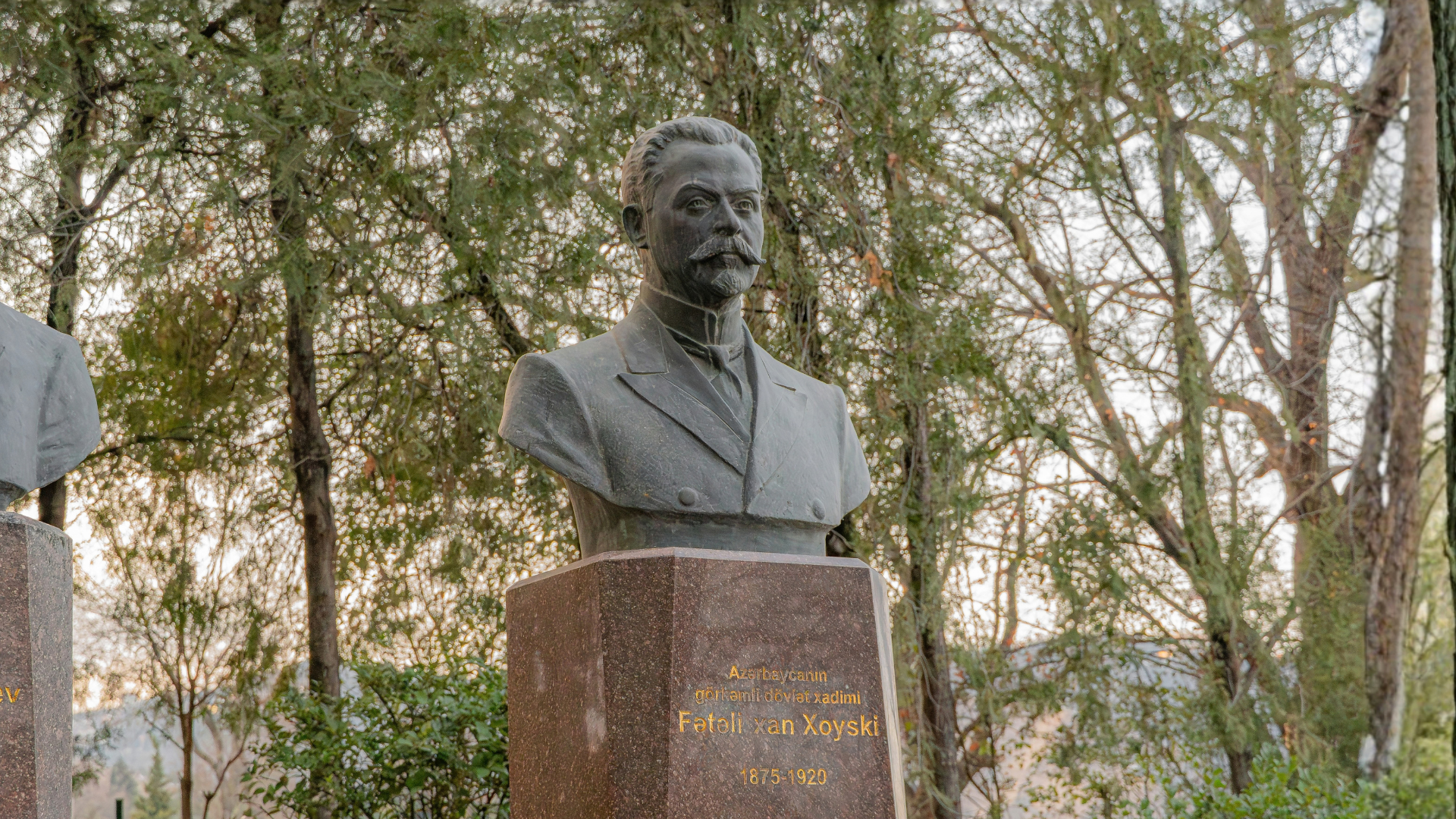
Fatali Khan Khoyski
Sculptor:
Unknown
A prominent memorial grave monument honoring Fatali Khan Khoyski, the first Prime Minister of the Azerbaijan Democratic Republic (ADR), who was assassinated in Tbilisi in 1920.
Year
2006
Opening Date
12.05.2007
City
Tbilisi, Old Tbilisi district
Architect
Unknown
Material
Granite and bronze
Dimensions
3.0m
National Botanical Garden of Georgia, Tbilisi, Georgia (Erected inside the Pantheon of Prominent Azerbaijanis)
Description
The grave monument to Fatali Khan Khoyski, the first Prime Minister of the Azerbaijan Democratic Republic (ADR), is located in the National Botanical Garden of Georgia in Tbilisi. Situated within the historic Pantheon of Prominent Azerbaijanis, this memorial marks the final resting place of a statesman who was assassinated in Tbilisi on June 19, 1920, by Armenian militants following the Bolshevik occupation of Baku.
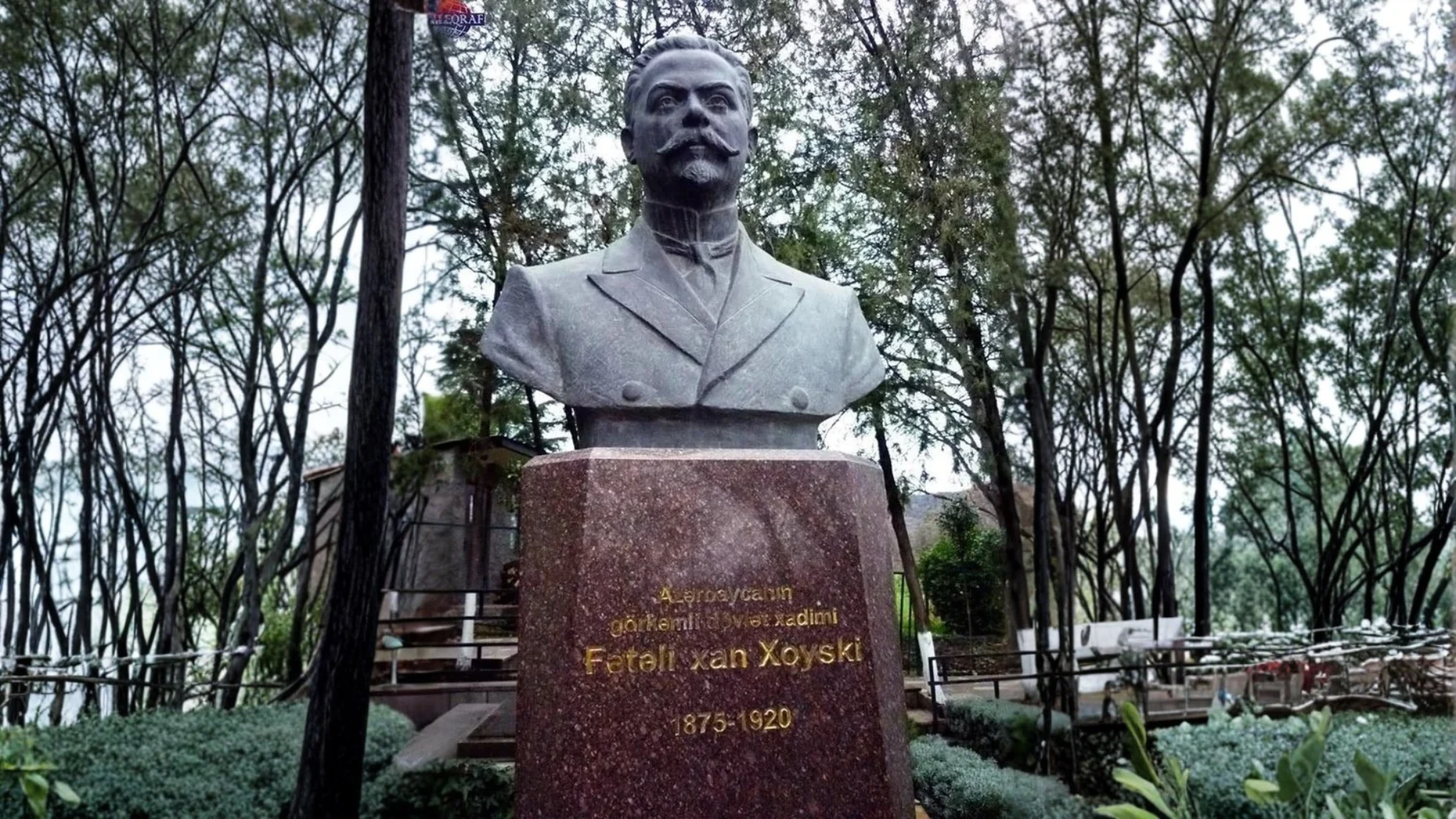
The monument is designed in a solemn, classical memorial style that reflects historical gravity. It features a masterfully sculpted bronze portrait sculpture integrated into a majestic rectangular gravestone. The memorial is defined by its clean, minimalist lines and high-quality dark polished granite finish. The facial features of the sculpture convey a sense of aristocratic dignity and the unyielding determination of a founding father who fought for national sovereignty.
The entire memorial complex was thoroughly reconstructed and revitalized with the backing of the Heydar Aliyev Foundation. This comprehensive project updated the surrounding infrastructure by introducing high-grade polished stone facing, adding structured pathways, and erecting a grand, unified commemorative backdrop. Inscribed clearly upon the dark stone in golden lettering are the statesman's name and historical dates, written in both Azerbaijani and Georgian.
Nestled along the scenic slopes of the Sololaki Ridge inside the National Botanical Garden, the monument stands in complete harmony with its serene natural environment. The peaceful backdrop of lush trees and quiet walking trails offers a respectful atmosphere for historical reflection. Positioned in the heart of the local pantheon, the Khoyski monument serves as a vital cultural sanctuary. It remains a deeply respected landmark visited regularly by diplomatic missions, researchers, and tourists, standing as an enduring symbol of statehood and sacrifice.
History
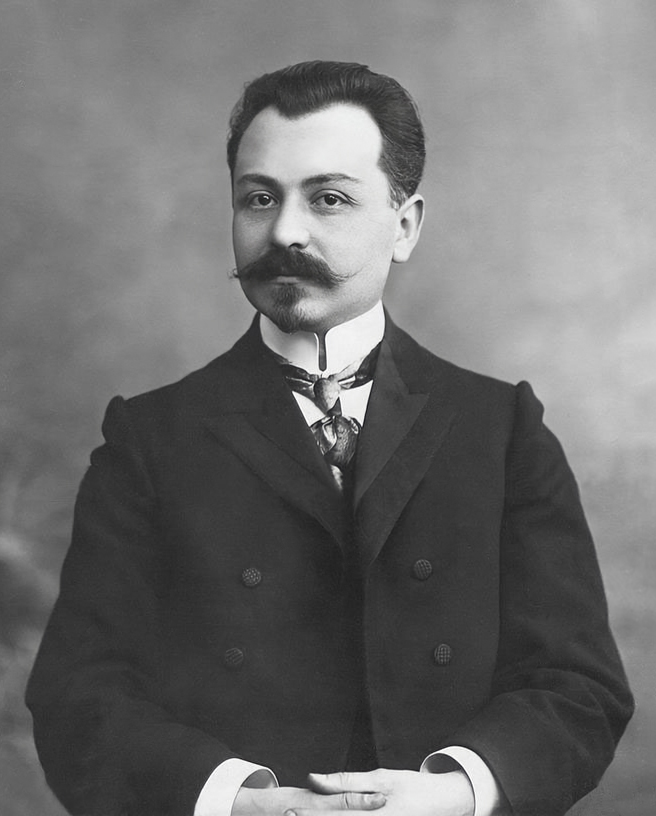
Fatali Khan Khoyski, whose memorial stands in Tbilisi, was a brilliant lawyer, an aristocratic statesman, and a towering founding father of modern Azerbaijani statehood. Born on December 7, 1875, into a noble family of military commanders in Shaki, he went on to graduate with a law degree from Moscow State University. His early professional career was defined by legal excellence, serving as a judge and prosecutor in several cities across the Caucasus, and later winning election to the Second State Duma of the Russian Empire, where he fiercely defended the rights of Muslim populations.
His historical legacy reached its zenith during the turbulent geopolitical shifts of 1918. Following the collapse of the Russian Empire, Khoyski became one of the key architects of the Azerbaijan Democratic Republic (ADR)—the very first secular, democratic republic in the Islamic world. On May 28, 1918, when the Declaration of Independence was proclaimed, Khoyski was appointed the country's first Prime Minister and Minister of Internal Affairs. Walking a treacherous political tightrope during a brutal world war, he successfully formed a multi-ethnic cabinet, built a national army from scratch with the help of the Caucasian Islamic Army, and moved the capital from Tbilisi to Ganja, and finally to a liberated Baku.
As Prime Minister, Khoyski laid the foundational legal and institutional pillars of a modern sovereign nation. Under his leadership, Azerbaijan introduced universal suffrage—granting women the right to vote ahead of many Western democracies—established Baku State University, adopted Azerbaijani as the official state language, and created a national currency. Even after stepping down as Prime Minister, he continued to serve his nation as Minister of Foreign Affairs, working tirelessly to secure the de facto international recognition of Azerbaijan's independence at the Paris Peace Conference in 1919.
The independent republic met a tragic end in April 1920, when the Bolshevik 11th Red Army crossed the borders and occupied Baku. Refusing to submit to Soviet rule, Khoyski moved to Tbilisi, which had become a temporary sanctuary for Azerbaijani political exiles. However, on June 19, 1920, Fatali Khan Khoyski was tragically assassinated in Tbilisi by Armenian militants as part of a targeted political operation. Today, his legacy stands untarnished—remembered not just as a diplomat, but as a fearless patriot who sacrificed his life to sow the first seeds of independent Azerbaijani democracy.
Location
Related Sculptures
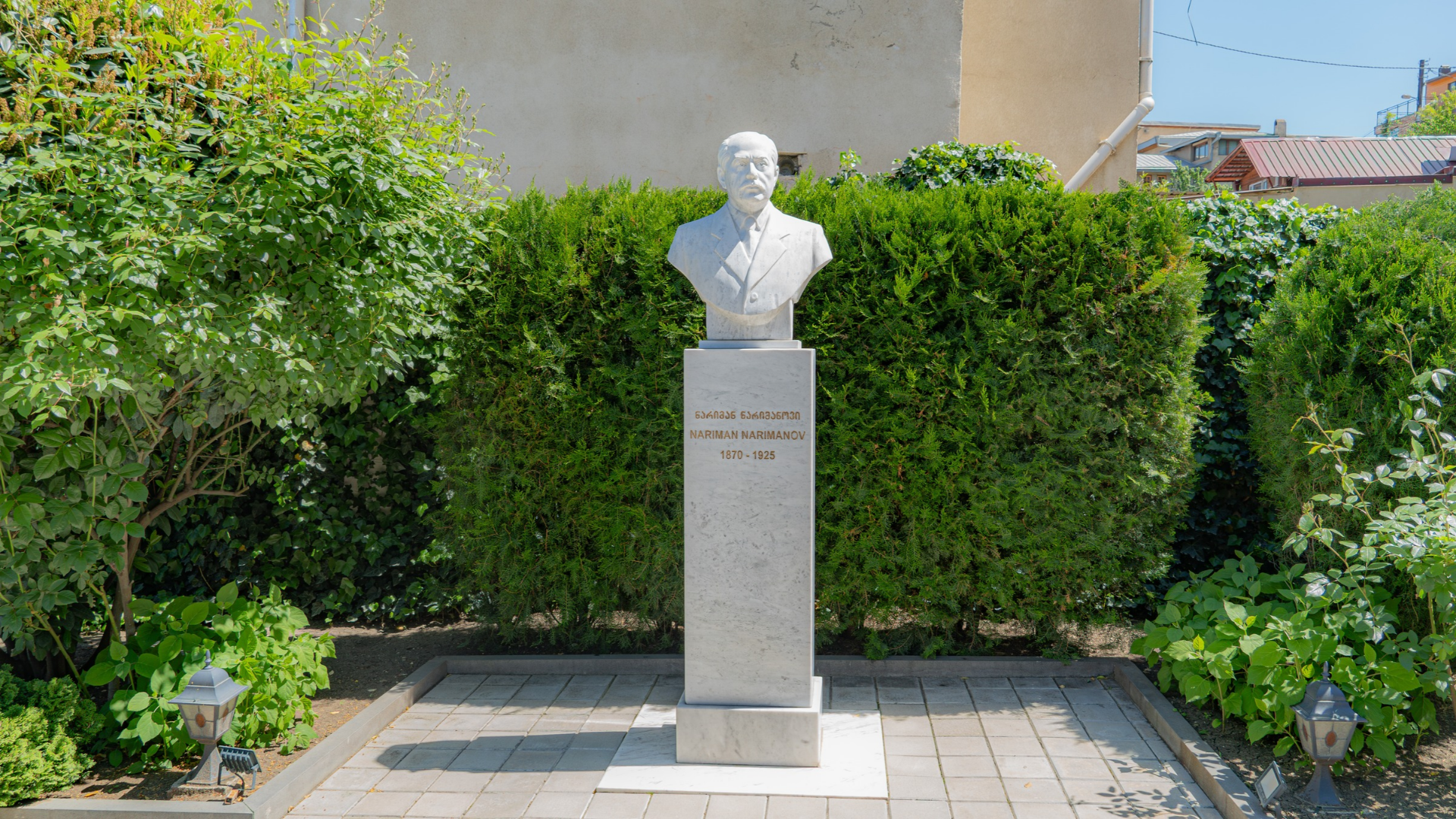
1982
Realism / Soviet Memorial Art
Nariman Narimanov
Unknown (Soviet-era public works assignment)
Tbilisi, Old Tbilisi district
Ioseb Grishashvili Street 41, Tbilisi, Georgia (Located at the courtyard of the Nariman Narimanov House-Museum)
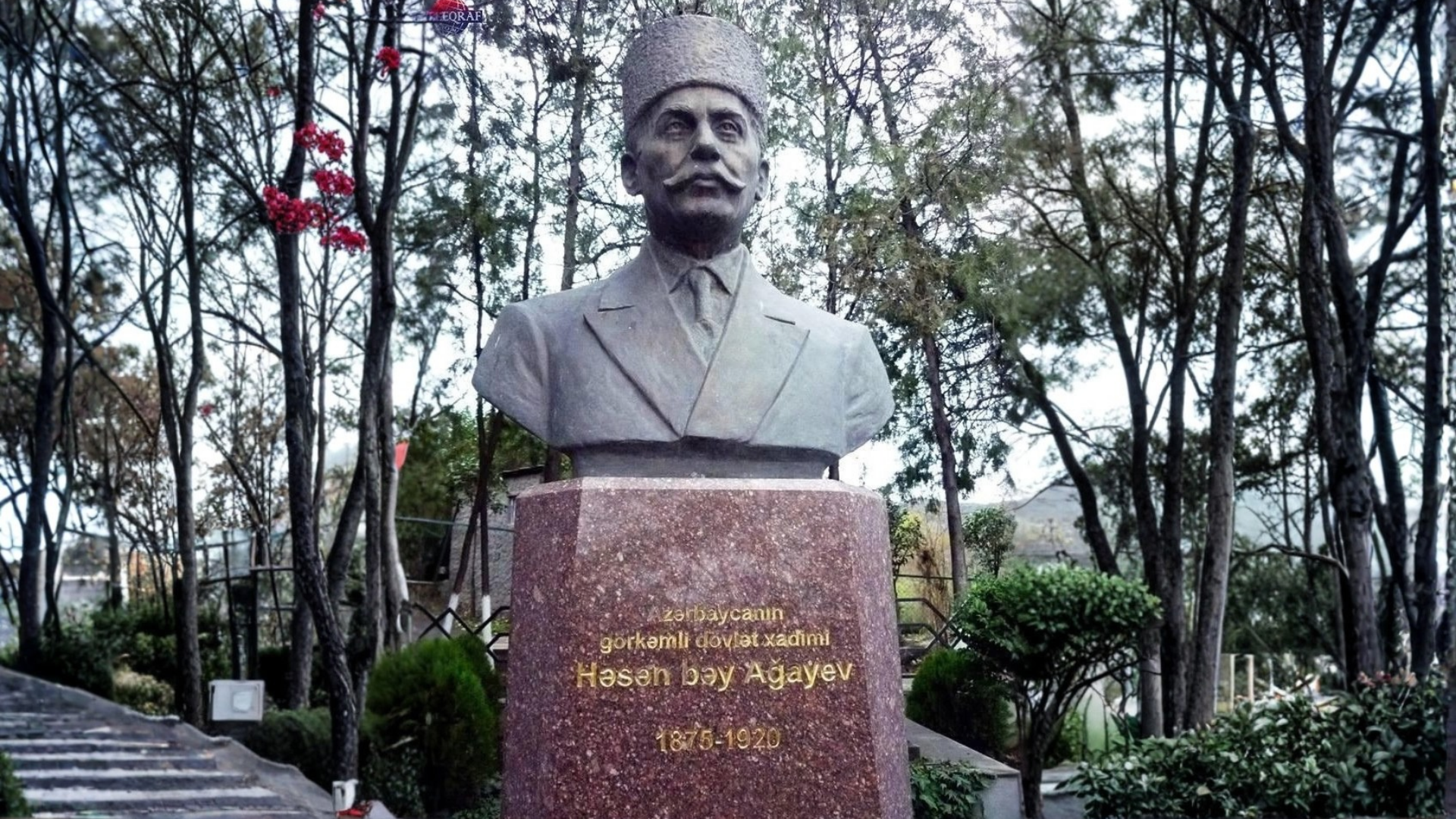
2006
Realism / Memorial Art
Hasan Bey Aghayev
Natig Aliyev
Tbilisi, Old Tbilisi district
ational Botanical Garden of Georgia, Tbilisi, Georgia (Erected inside the Pantheon of Prominent Azerbaijanis)
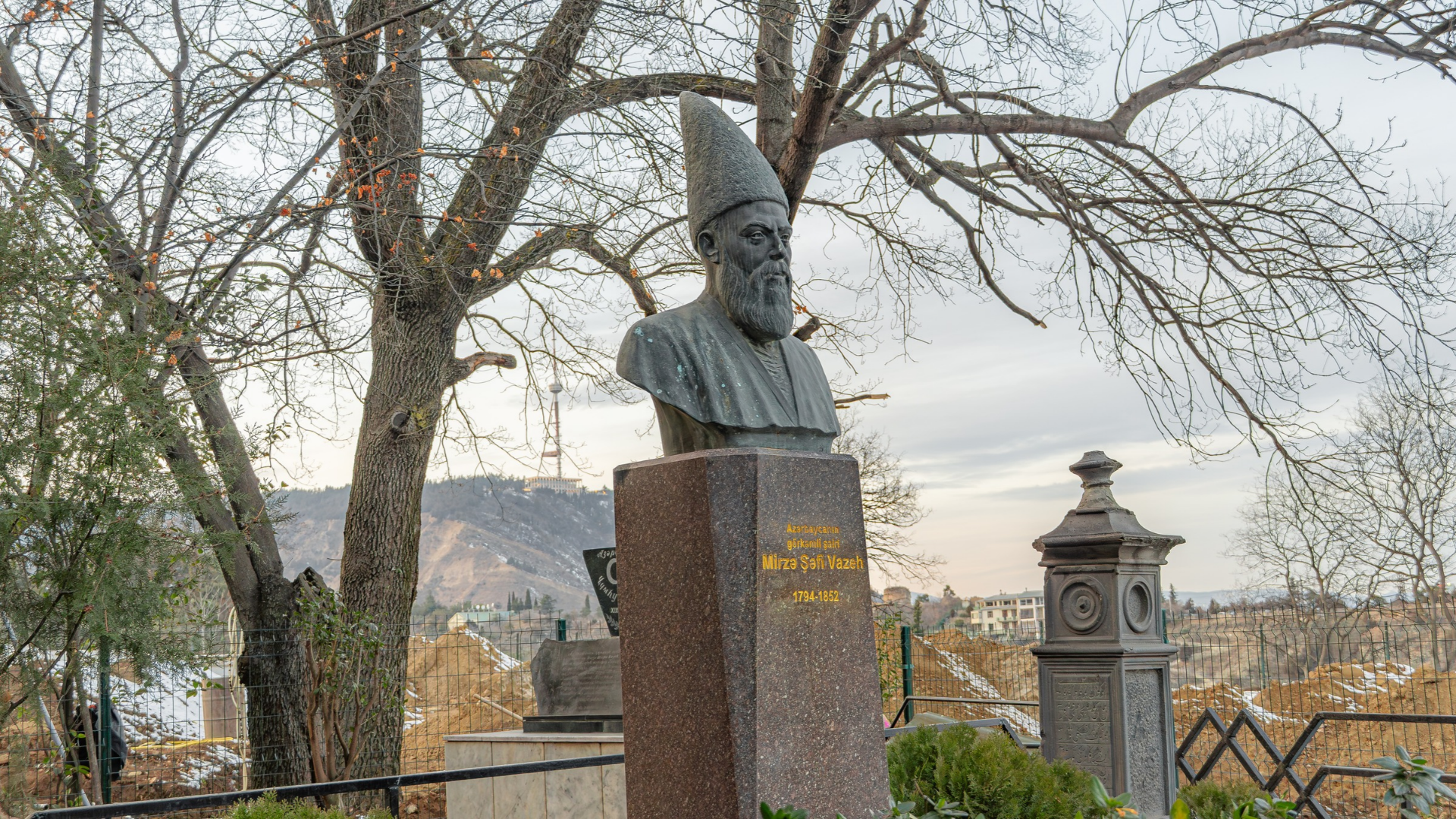
2006
Realism / Memorial Art
Mirza Shafi Vazeh
Unknown
Tbilisi, Old Tbilisi district
National Botanical Garden of Georgia, Tbilisi, Georgia (Erected inside the Pantheon of Prominent Azerbaijanis)