




Realism / Soviet Memorial Art
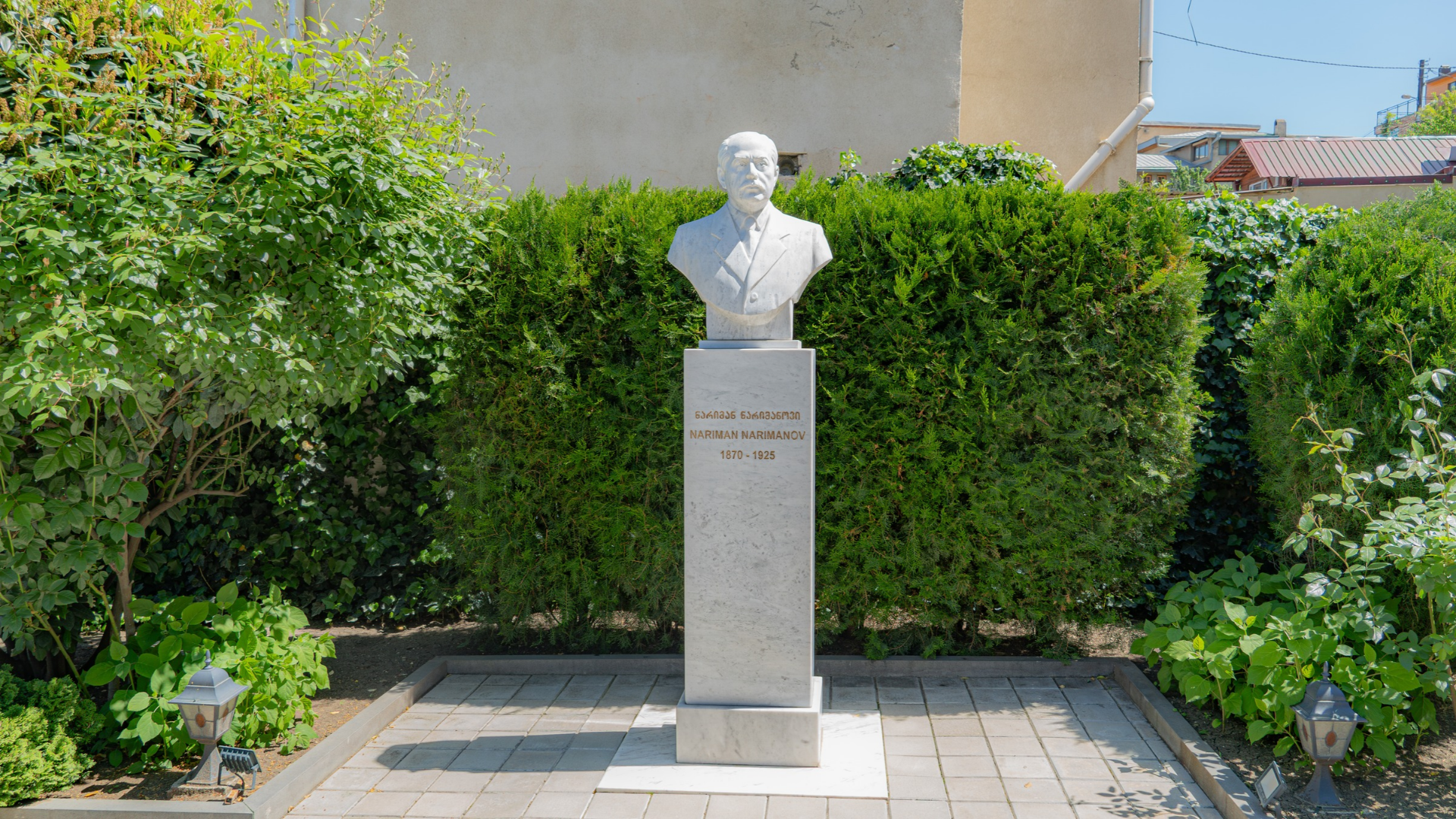
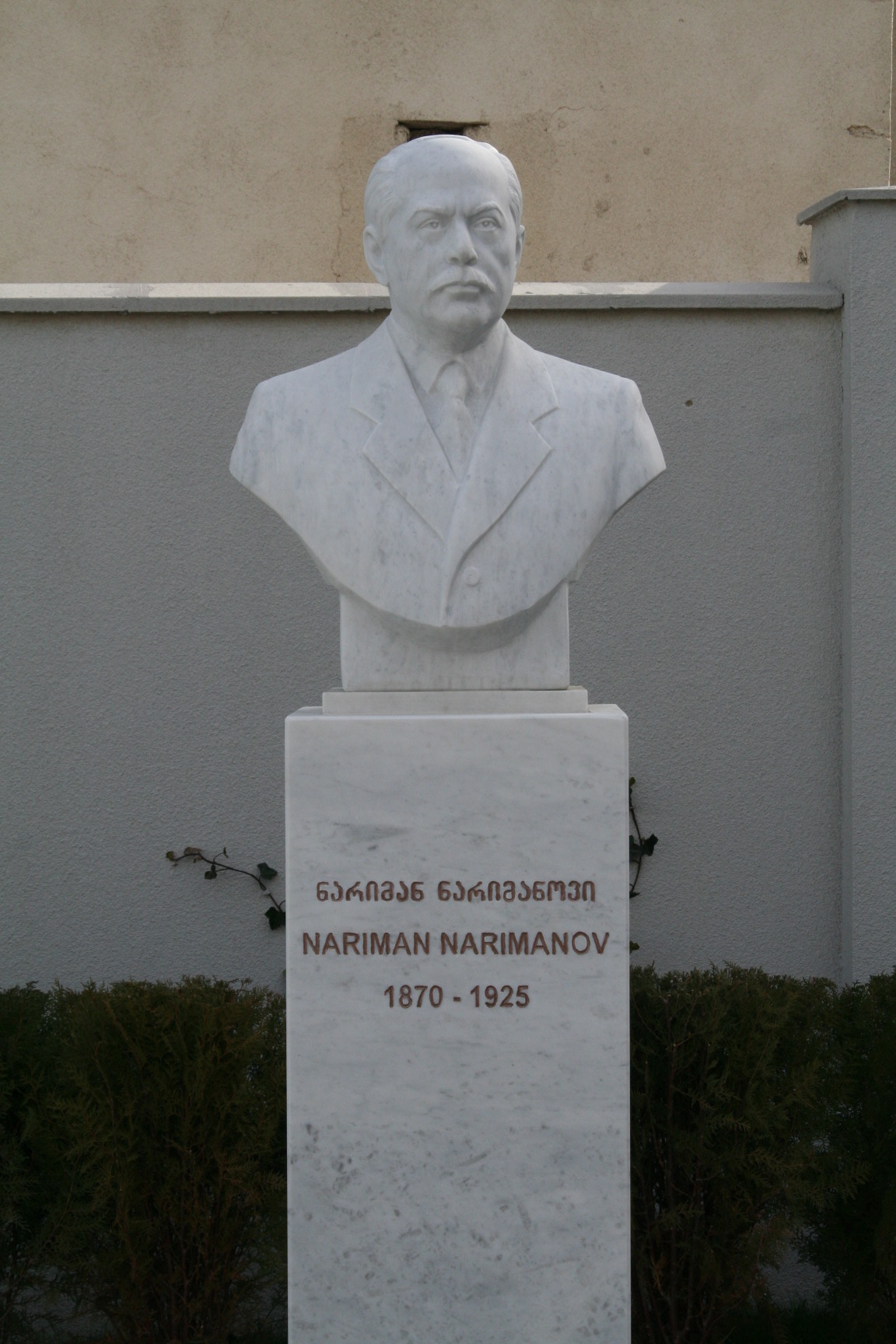
Nariman Narimanov
Sculptor:
Unknown (Soviet-era public works assignment)
A classic bronze bust honoring the prominent Azerbaijani writer, doctor, and statesman Nariman Narimanov, who was born in Tbilisi. It is erected directly outside his preserved memorial residence.
Year
1982
Opening Date
06.11.1982
City
Tbilisi, Old Tbilisi district
Architect
Unknown
Material
Bronze (bust) on a stone pedestal
Dimensions
2.8m
Ioseb Grishashvili Street 41, Tbilisi, Georgia (Located at the courtyard of the Nariman Narimanov House-Museum)
Description
The monument to Nariman Narimanov, one of the most prominent political, social, and cultural figures of Azerbaijan in the early 20th century, stands as a grand architectural landmark in the capital city of Baku. Located in the Yasamal district at the intersection of Nariman Narimanov Avenue and Mikayil Mushfig Street, the statue is positioned on a high hill within a park that bears his name. The monument serves as a powerful tribute to a multi-faceted historical figure who left a deep mark on the nation as a statesman, Bolshevik revolutionary, acclaimed writer, playwright, and dedicated medical doctor.
The creation of the monument is closely tied to the initiatives of Heydar Aliyev during his leadership of Soviet Azerbaijan. After navigating complex political approvals from high-ranking Soviet officials in Moscow, the grand opening ceremony of the monument took place on June 6, 1972, with Heydar Aliyev actively participating to emphasize its cultural and national importance. The towering, majestic bronze sculpture was crafted by the celebrated People's Artist of the Azerbaijan SSR, sculptor Jalal Garyaghdi, while the overall architectural design of the complex was developed by the architects T. Abdullayev and Y. Kadymov.
Architecturally, the monument is striking for its massive scale and expressive composition. The thirty-foot bronze figure of Narimanov is depicted in a long formal coat, portrayed with a reflective, authoritative posture that captures both his intellectual depth and political resolve. This immense statue rests upon a twenty-five-foot-high rectangular pedestal, creating an imposing presence that commands the surrounding urban skyline. While the front part of the hill was originally faced with dark stone slabs to project a strict, austere appearance, a large-scale reconstruction of the park complex in 2008 updated the pedestal with light-yellow marble, beautifully integrating the historical monument into the contemporary aesthetic of modern Baku.
Beyond its artistic value, the Narimanov monument carries a unique historical significance regarding the preservation of national identity. Following the collapse of the Soviet Union in 1991, while most Soviet-era political monuments and statues of communist leaders were dismantled across Baku, this specific monument was intentionally left untouched. The Azerbaijani public and leadership recognized Narimanov not merely through a strict ideological lens, but as a national hero who fiercely advocated for Azerbaijan's regional autonomy, culture, and territorial interests during a turbulent geopolitical era. Today, the surrounding park remains a vibrant, well-maintained public space where the monument continues to bridge the historical legacy of the early 20th century with the modern capital.
History
Nariman Narimanov, whose grand monument commands the skyline of Baku, was one of the most brilliant, complex, and tragic figures in the modern history of Azerbaijan. Born on April 14, 1870, in Tbilisi, Georgia, into a poor family, he rose to become an extraordinary polymath—a dedicated medical doctor, a pioneering writer and playwright, and a highly influential statesman whose political decisions shaped the destiny of the Azerbaijani nation during the turbulent transition into the Soviet era.
Narimanov began his professional journey as an educator and intellectual, graduating from the Gori Teachers' Seminary and later earning a medical degree from Novorossiya University in Odessa. As a physician, he treated the poor for free, founded the first public reading room in Baku to spread literacy, and wrote groundbreaking literary works. His historical tragedy Nadir Shah and his social dramas revolutionized Azerbaijani theater, challenging traditional dogmas and advocating for modern education, secularism, and the emancipation of women.
His deep empathy for the working class eventually drew him into political activism, leading him to join the social-democratic movement. Following the fall of the Azerbaijan Democratic Republic in 1920, Narimanov became the Chairman of the Council of People's Commissars of the newly formed Azerbaijan Soviet Socialist Republic. In this ultimate leadership position, he walked a treacherous political tightrope; while he was a committed Bolshevik, his primary loyalty was always to the preservation of Azerbaijani national identity, its culture, and its sovereign territorial integrity.
Narimanov fiercely resisted the centralizing pressures from Moscow and regional political rivals who sought to undermine Azerbaijan's interests. He famously fought to keep the regions of Nakhchivan and Nagorno-Karabakh within Azerbaijan's borders and adamantly opposed the unconditional exploitation of Baku's oil wealth without fair compensation for the Azerbaijani people. His firm, nationalistic stances brought him into direct conflict with powerful figures like Joseph Stalin. In an effort to neutralize his influence in Baku, Moscow politically exiled him by appointing him to high-ranking federal posts, including one of the chairmen of the Central Executive Committee of the USSR.
Nariman Narimanov passed away under highly mysterious circumstances in Moscow on March 19, 1925, suffering a sudden, fatal heart attack shortly after a walk, leading many historians to suspect he was poisoned on Stalin's orders. Despite Soviet attempts to over-politicize his legacy, the Azerbaijani people have always remembered him as a national champion who used his immense political leverage to shield his homeland during its darkest geopolitical shifts. Today, his legacy stands untarnished—celebrated not as an ideologue, but as a visionary patriot who defended the cultural and territorial foundational pillars of modern Azerbaijan.
Gallery
360° Panorama
Location
Related Sculptures
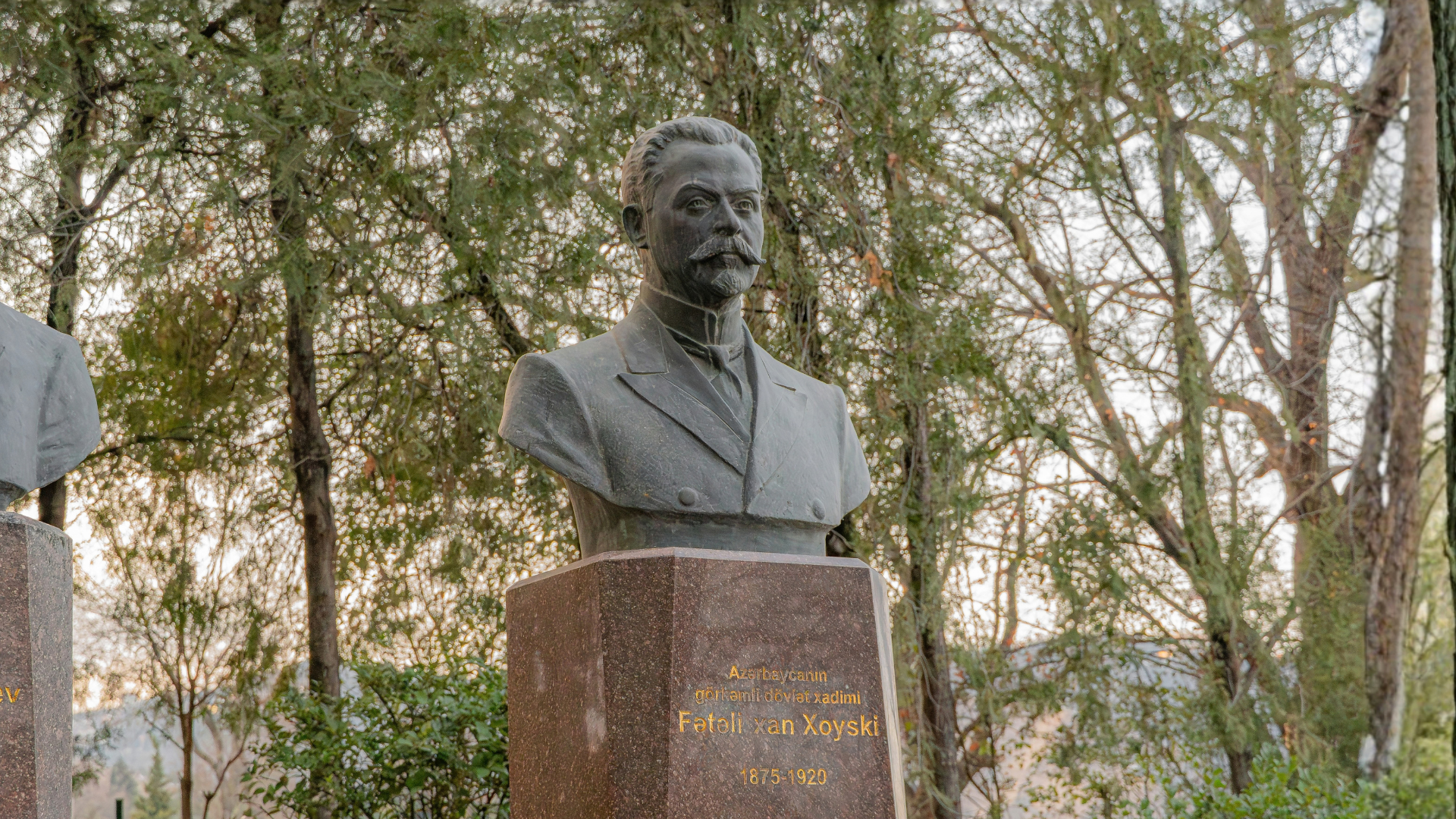
2006
Realism / Memorial Art
Fatali Khan Khoyski
Unknown
Tbilisi, Old Tbilisi district
National Botanical Garden of Georgia, Tbilisi, Georgia (Erected inside the Pantheon of Prominent Azerbaijanis)
2006
Realism / Memorial Art
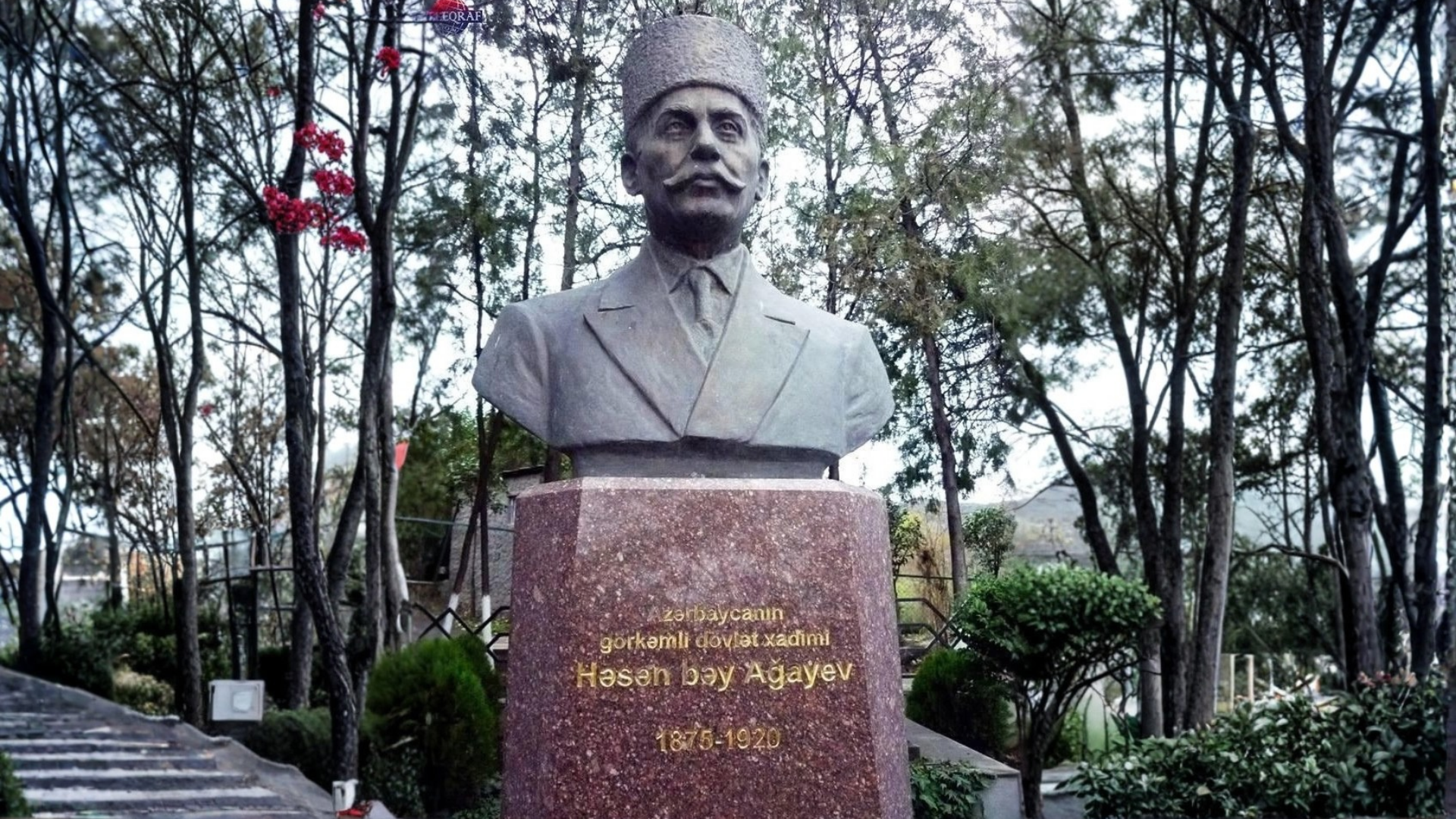
Hasan Bey Aghayev
Natig Aliyev
Tbilisi, Old Tbilisi district
ational Botanical Garden of Georgia, Tbilisi, Georgia (Erected inside the Pantheon of Prominent Azerbaijanis)
2006
Realism / Memorial Art
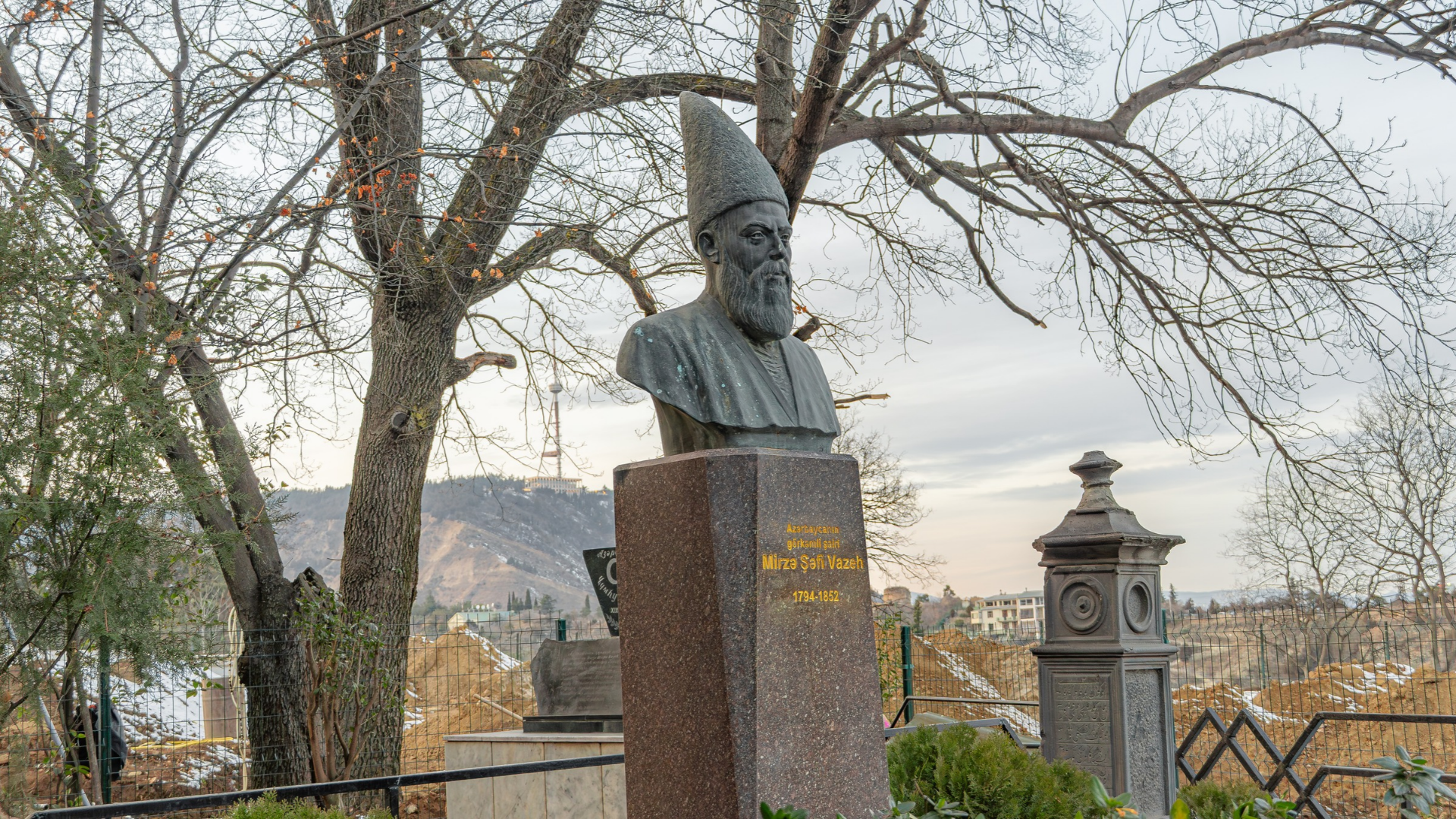
Mirza Shafi Vazeh
Unknown
Tbilisi, Old Tbilisi district
National Botanical Garden of Georgia, Tbilisi, Georgia (Erected inside the Pantheon of Prominent Azerbaijanis)