




Realism
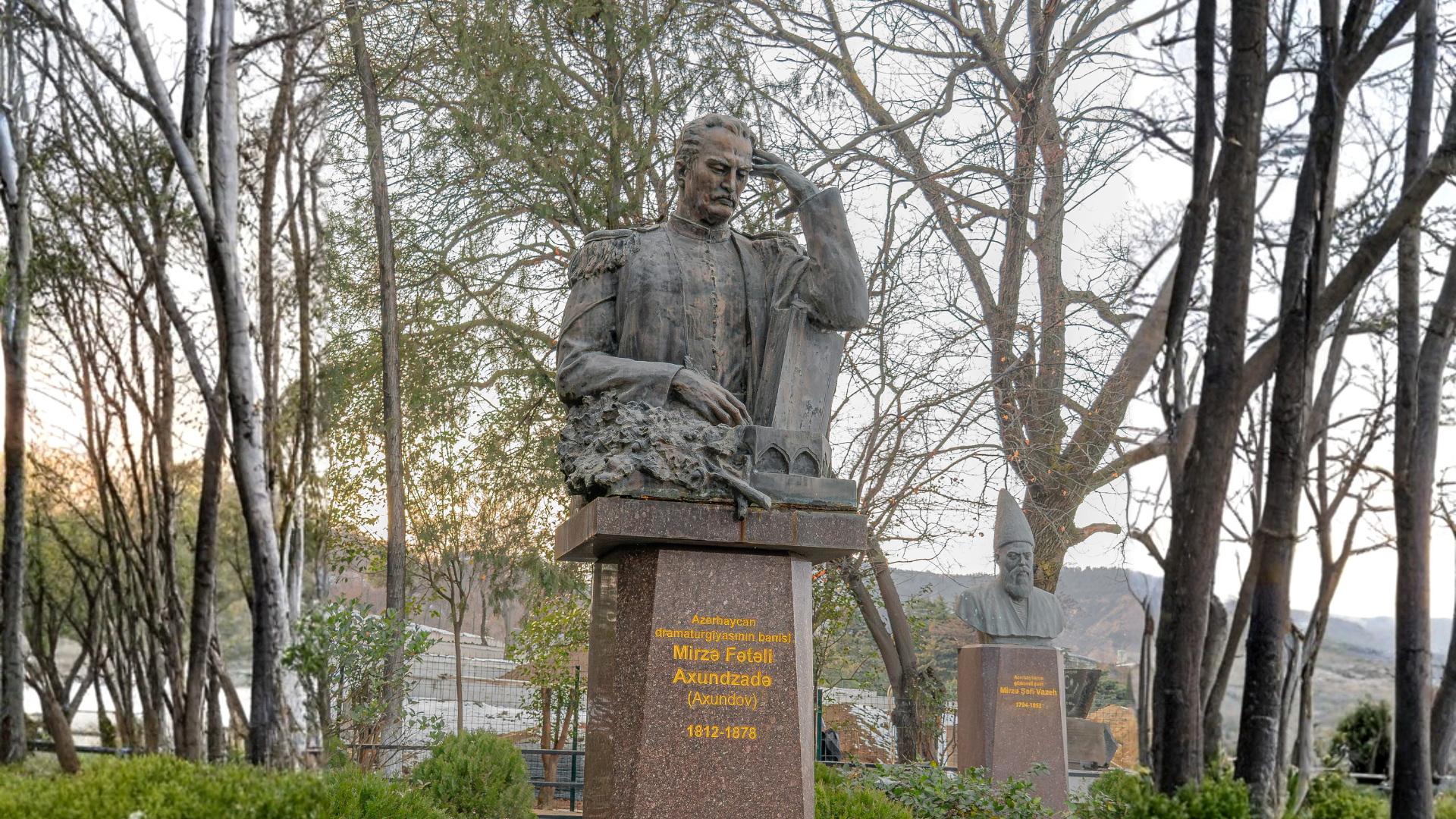
Mirza Fatali Akhundov
Sculptor:
Unknown (Restored and managed by public cultural initiatives)
A classic bronze bust honoring the renowned Azerbaijani playwright, philosopher, and founder of modern Azerbaijani drama, Mirza Fatali Akhundov. It is placed as a landmark tribute at his former residence which now serves as a major cultural center.
Year
2006
Opening Date
30.06.2006
City
Tbilisi, Old Tbilisi / Abanotubani district
Architect
Unknown
Material
Bronze (bust) on a stone pedestal
Dimensions
3.2m
17 Vakhtang Gorgasali Street, Tbilisi, Georgia (Erected at the premises of the Mirza Fatali Akhundov Museum of Azerbaijani Culture)
Description
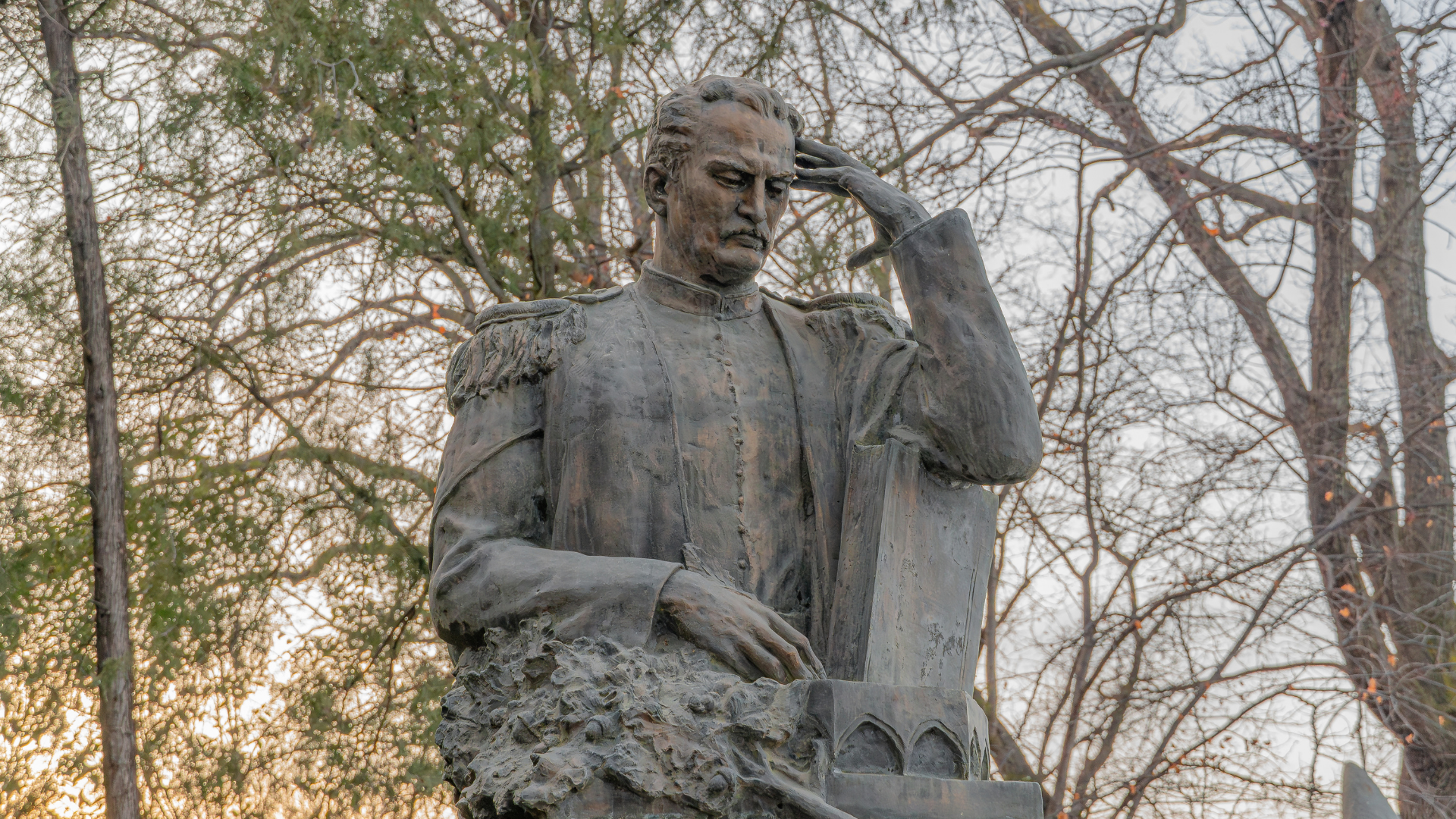
The monument to Mirza Fatali Akhundov, the founder of modern Azerbaijani dramaturgy, realist literature, and a visionary philosopher of the East, is located in the National Botanical Garden of Georgia in Tbilisi. Situated in the historic "Pantheon of Prominent Azerbaijanis," this monument marks his final resting place, honoring the profound legacy of a thinker who spent a major part of his life and career in Tbilisi, seamlessly bridging the cultural worlds of Azerbaijan and Georgia.
The monument is crafted in a deeply evocative, classical memorial style. Rather than an austere political statue, it features a beautifully detailed bronze bust set upon a rectangular granite pedestal. The design captures the intellectual gravity and introspective nature of Akhundov, portraying him with his characteristic refined posture and thoughtful facial expression, reflecting his role as an enlightened educator and reformer. The surrounding area was extensively restored with the support of the Heydar Aliyev Foundation, adding polished stone facing, clear pathways, and a dignified memorial wall that lists his name and historical dates in both Azerbaijani and Georgian.
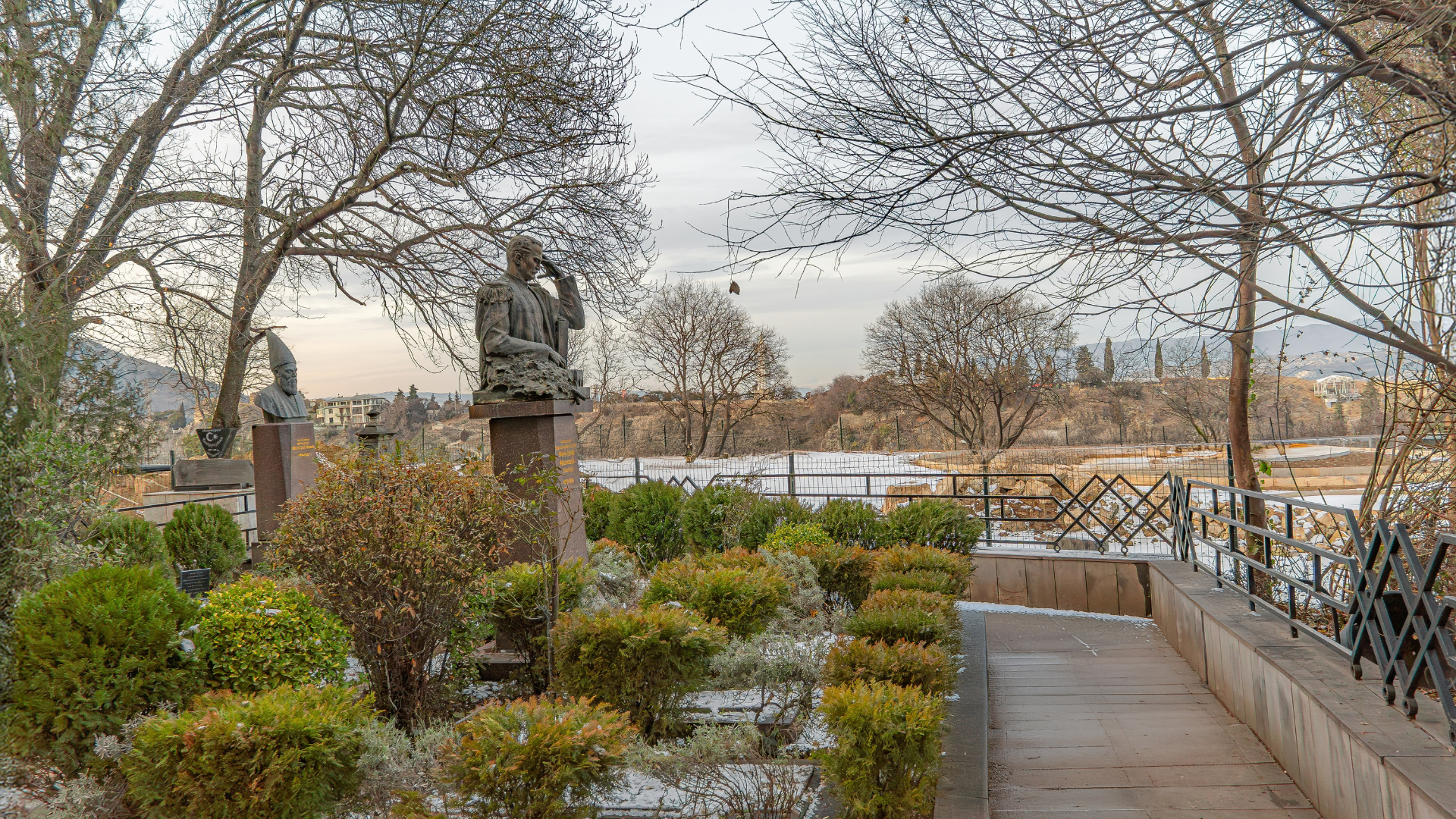
The setting of the monument lends it a unique, peaceful atmosphere. Nestled on the scenic foothills of the Sololaki Ridge within the lush, green landscape of the National Botanical Garden, the monument stands in complete harmony with nature. It is surrounded by centuries-old trees and quiet walking paths, offering a serene space for contemplation. As the centerpiece of the local pantheon—where other monumental figures like Fatali Khan Khoyski and Hasan bey Aghayev are also buried—the Akhundov monument functions as a vital cultural shrine. It is a highly respected landmark regularly visited by official diplomatic delegations, scholars, and tourists from Azerbaijan and Georgia alike, standing as an enduring testament to international cultural heritage and intellectual unity in the Caucasus.
History
Mirza Fatali Akhundov, whose final resting place is honored in the heart of Tbilisi, was an extraordinary polymath, philosopher, and the undisputed founder of modern Azerbaijani literature and drama. Born on July 12, 1812, in Nukha (modern-day Shaki), he moved to Tbilisi in 1834, where he spent nearly his entire adult life working as a translator of Oriental languages for the Russian Imperial administration in the Caucasus. This unique position allowed him to serve as a vital cultural bridge, interacting closely with Russian, Georgian, Armenian, and Persian intellectuals of the era.
Often referred to as the "Molière of the East," Akhundov revolutionized Islamic and Eastern literature by introducing Western literary genres. Between 1850 and 1855, he wrote six groundbreaking comedies that laid the foundation for Azerbaijani national theater. Through sharp satire and vivid realism, his plays criticized social backwardness, religious fanaticism, superstition, and the oppression of women, while passionately advocating for secular education and human rights. His literary genius did not stop at drama; his 1857 philosophical novella, The Deceived Stars, pioneered the genre of historical prose in Azerbaijani literature.
Beyond his literary achievements, Akhundov was a visionary social reformer and philosopher. He recognized that widespread literacy was the key to awakening the East, which led him to draft the first projects for reforming the Arabic script into a Latin-based alphabet. Although his tireless efforts to implement this new alphabet faced heavy resistance from conservative regimes in both Istanbul and Tehran during his lifetime, his ideas laid the structural groundwork for the alphabet reforms achieved in the region decades later. His philosophical treatise, Three Letters of Kemal-ud-Dovleh, cemented his status as a profound materialist thinker who challenged traditional dogmas in favor of scientific rationalism.
Mirza Fatali Akhundov passed away on March 10, 1878, in Tbilisi. Because of his secular views, local religious authorities refused to bury him in traditional Muslim cemeteries, leading to his burial in what was then the Muslim cemetery inside the Botanical Garden—a site that has now become the Pantheon of Prominent Azerbaijanis. Today, Akhundov is remembered not just as a writer, but as a towering figure of the Islamic Enlightenment whose radical commitment to progress, secularism, and education fundamentally shaped the intellectual identity of modern Azerbaijan and the wider Caucasus.
Gallery
360° Panorama
Location
Related Sculptures
2007
Realism / Monumental art
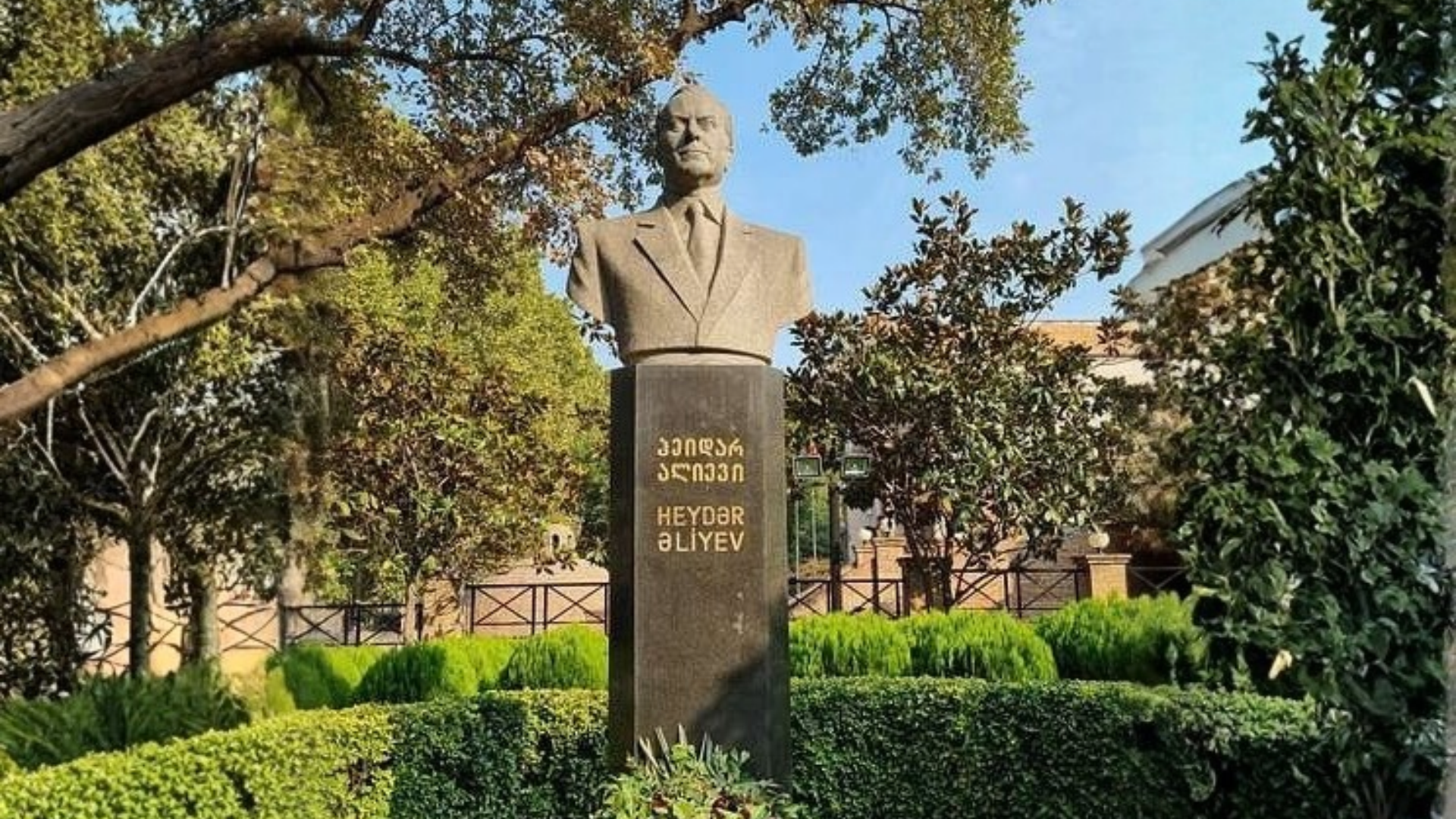
Heydar Aliyev
Natig Aliyev
Tbilisi, Old Tbilisi
Heydar Aliyev Park, Gorgasali Street, Tbilisi, Georgia
1982
Realism / Soviet Memorial Art
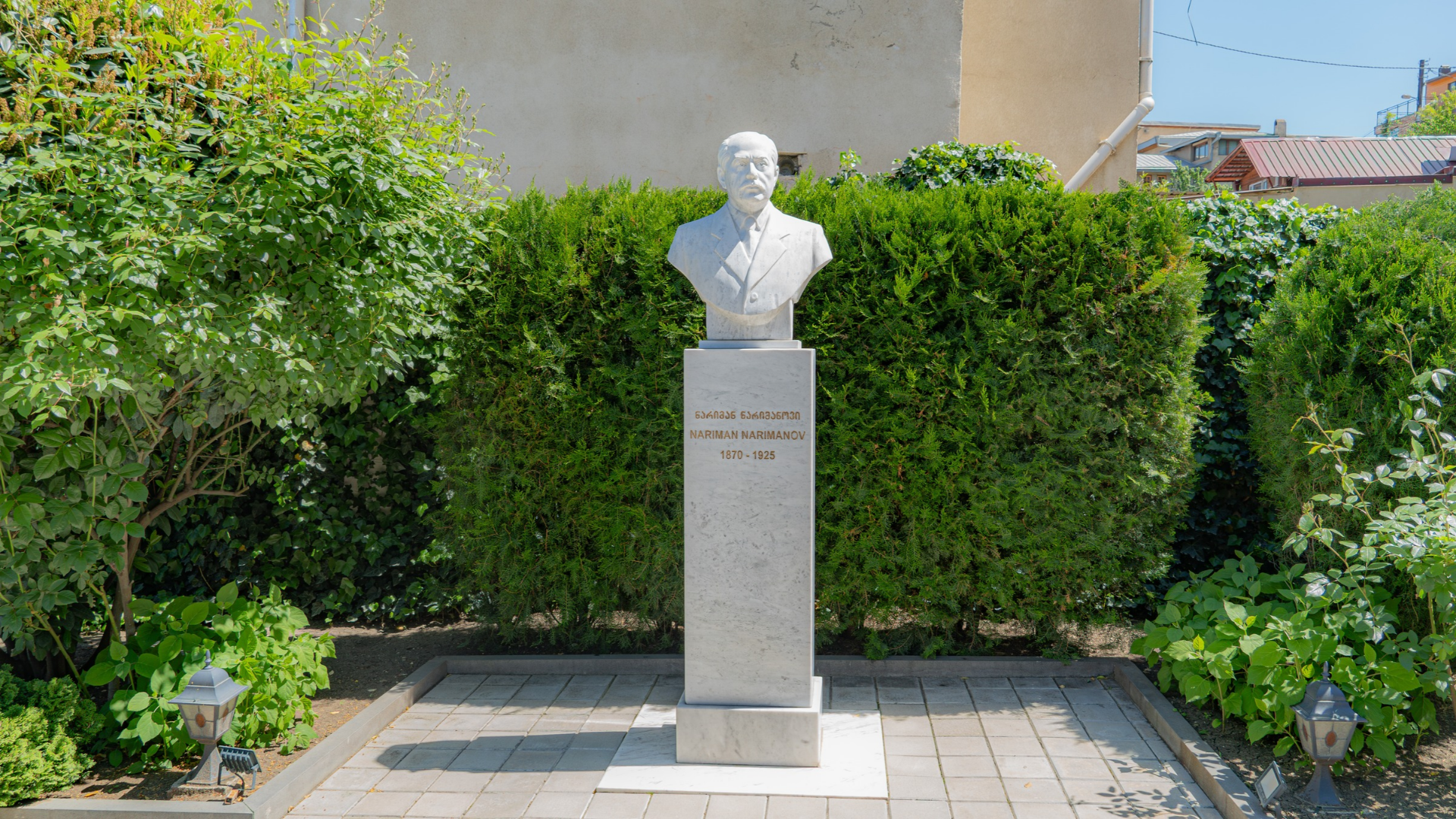
Nariman Narimanov
Unknown (Soviet-era public works assignment)
Tbilisi, Old Tbilisi district
Ioseb Grishashvili Street 41, Tbilisi, Georgia (Located at the courtyard of the Nariman Narimanov House-Museum)
2015
Realism
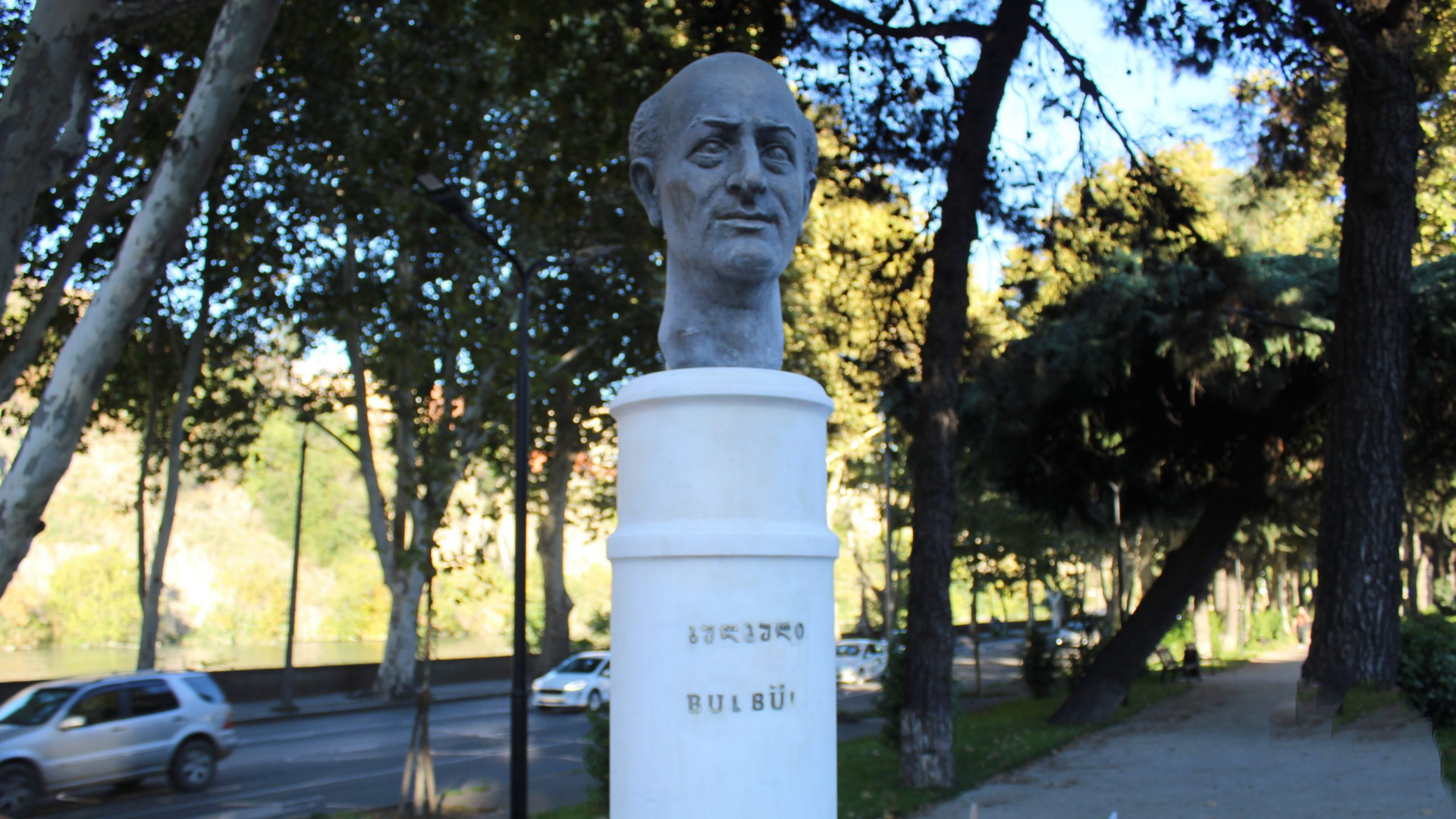
Bulbul
Giorgi Japaridze
Tbilisi, Old Tbilisi / Avlabari district
Mirza Fatali Akhundov Museum of Azerbaijani Culture, 17 Vakhtang Gorgasali Street, Tbilisi, Georgia